

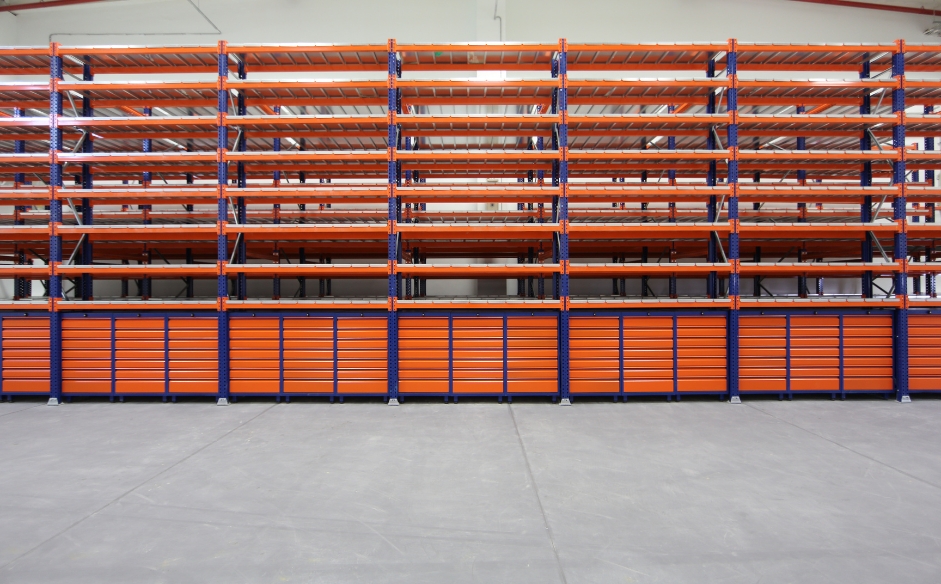
What if a storage rack collapses, damaging inventory or injuring an employee?
Many Singapore businesses focus on rack dimensions and pricing, but overlook two crucial factors: warranty coverage and verified safety ratings. A rack might look solid, but can fail if not properly engineered, tested, or installed.
This is critical in Singapore’s demanding industrial environment, where warehouses manage heavier loads, higher stacking, and faster operations. Without certified load capacity and structural integrity, minor weaknesses can become serious safety risks.
This guide explains rack warranties, safety ratings, and how to evaluate a system’s long-term reliability. You’ll learn how to protect your operations, staff, and investment with smarter purchasing decisions.
A storage rack is a structural system, not just a metal shelf.
Every beam, upright, anchor point, and connector is designed to support a specific amount of weight under controlled conditions. When buyers ignore safety ratings, they risk overloading the system beyond its engineered limits. Over time, this can lead to bent beams, unstable uprights, or even full rack collapse.
In Singapore, warehouse space is expensive, which means businesses often maximise vertical storage aggressively. While this improves storage efficiency, it also increases structural stress on the rack system itself. Higher stacking heights create greater pressure on load distribution and rack stability.
Safety ratings exist to ensure the system performs safely under real operational conditions.
One common misunderstanding involves load terminology.
Static load refers to the maximum weight a rack can safely hold while stationary. Dynamic load considers movement and operational stress, such as forklift loading and unloading activity.
This distinction matters because moving pallets create additional force and vibration across the structure. A rack that appears sufficient on paper may become unsafe once real warehouse movement is introduced.
Lower-cost systems often compromise on steel thickness, reinforcement design, or engineering precision.
While the upfront savings may seem attractive, poorly manufactured racks are more vulnerable to:
A single structural failure can easily cost more than the original savings through damaged inventory, operational downtime, and safety liabilities.
Not all rack warranties offer the same protection.
Many buyers assume a “10-year warranty” automatically covers every possible issue. In reality, warranties usually apply only to manufacturing defects under proper usage conditions.
Understanding the fine print is essential before making a purchase.
A standard warehouse rack warranty typically covers:
However, warranty protection usually excludes damage caused by improper use.
Many rack issues fall outside standard warranty coverage, including:
This is why proper installation and operational discipline matter just as much as the rack quality itself.
Professional suppliers provide detailed documentation for every system, including:
Without this documentation, businesses may struggle to prove compliance if warranty disputes arise later.
Rack load ratings are not random estimates.
They are engineered calculations based on structural testing, steel properties, beam deflection limits, and safety factors. Properly designed systems undergo testing to determine how much weight they can safely support without excessive bending or instability.
Several factors affect load capacity.
Longer beams naturally experience more flex under heavy loads.
Engineers calculate acceptable deflection levels to ensure the rack remains stable while carrying maximum weight. Excessive beam bending weakens the structure over time and increases failure risk.
The upright frame carries the vertical load from every shelf level above it.
Thicker steel, reinforced bracing, and stronger anchor systems improve the overall structural capacity. Taller racks require even greater reinforcement due to increased leverage and sway forces.
Uneven pallet placement creates dangerous pressure points.
Even if the total weight stays within the rated limit, poor load distribution can still compromise structural integrity. Proper pallet positioning is essential for long-term rack stability.
Rack systems rarely fail without warning.
Most failures develop gradually due to operational damage, environmental exposure, or repeated overloading.
Forklift collisions are one of the leading causes of rack damage.
Even small impacts can weaken upright frames or loosen beam connectors. Over time, repeated minor collisions significantly reduce structural integrity.
Singapore’s humid climate accelerates corrosion, especially in non-climate-controlled warehouses.
Poor coating quality or exposed steel surfaces may begin rusting over time, weakening structural performance. This is particularly important for facilities near coastal industrial areas.
One of the most dangerous mistakes is exceeding load limits “just temporarily.”
Repeated overloading creates cumulative stress that weakens beams and connectors. Eventually, the system may fail unexpectedly under normal operating conditions.
Even the highest-quality rack system can become unsafe if installed incorrectly.
Professional installation ensures:
Improper installation increases the risk of sway, instability, and premature wear.
Warehouse flooring directly affects rack stability.
Uneven concrete surfaces can create load imbalance across the system. Professional installers carefully assess floor conditions before securing the structure.
A professionally designed system also considers future scalability.
Businesses often expand storage capacity over time. Proper planning allows additional bays or levels to be integrated safely, without compromising the original structure.
Rack systems should never be treated as “install and forget” equipment.
Regular inspections help identify small issues before they become major hazards.
Warehouse managers should routinely check for:
Even minor visible damage can affect overall stability.
Staff should understand basic rack safety practices, including:
A strong safety culture significantly reduces long-term operational risks.
Rack safety is not only about protecting inventory.
It also protects employees, operational continuity, and business liability.
A structural collapse can lead to:
Investing in properly rated systems reduces these risks substantially.
Higher-quality rack systems often deliver better long-term value through:
The cheapest option upfront is rarely the cheapest option over time.
A storage rack is one of the most important structural systems inside any warehouse or storeroom.
While dimensions and pricing often receive the most attention, warranty coverage and verified safety ratings ultimately determine how reliable the system will be over time.
By understanding load ratings, professional installation requirements, maintenance responsibilities, and warranty limitations, Singapore businesses can make smarter long-term investments that protect both operations and workplace safety.
The goal isn’t simply storing more items.
It’s creating a storage system that remains stable, efficient, and dependable for years to come.
At ZEssentials, we believe storage systems should deliver both efficiency and long-term peace of mind.
Our storage rack solutions are designed with a strong focus on:
We understand that every warehouse operates differently. That’s why we work closely with businesses to recommend systems suited to their actual operational requirements, not just theoretical capacity figures.
Whether you’re outfitting a retail storeroom, industrial warehouse, office archive, or logistics facility, proper planning makes all the difference.
A rack safety rating indicates the maximum load the system can safely support under specified conditions. This includes factors like beam length, upright strength, and load distribution.
No. Most rack warranties exclude damage caused by forklift collisions, improper use, or overloading beyond the specified capacity.
Visual inspections should be performed regularly, while professional structural inspections are typically recommended annually or whenever significant damage occurs.
Yes. Internal stress, weakened connectors, or repeated overloading may compromise structural integrity before visible signs become obvious.
Professional installation ensures correct anchoring, alignment, and load distribution, which are essential for long-term safety and warranty compliance.
Yes. Corrosion weakens steel over time and may reduce the rack’s load-bearing capability, especially in humid environments like Singapore.
Only if the system is professionally reassessed and upgraded. Exceeding original load ratings without engineering approval is unsafe.
Not necessarily. The best system depends on your inventory type, warehouse layout, operational workflow, and required load capacity.